EN   DA   SV
To gain full access to our webshop, find our entire product range and see our prices, you need to be logged in.
Log in to your account here or sign up as a customer here.
We don't have products matching your search criteria in our local stock, so we included results from our external stocks.
Show all options
Show all options
Show all options
Show all options
Show all options

Interne harddiske

(1133)

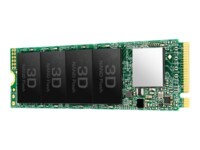
Transcend SSD MTE245S 500GB M.2 PCI Express 4.0 x4 (NVMe)

KIOXIA EXCERIA G2 SSD LRC20Z002TG8 2TB M.2 PCI Express 3.1 x4 (NVMe)

  • Product no 1000039016
  • Model LRC20Z002TG8
  • Brand KIOXIA
  • EAN 4582563854000

Seagate IronWolf Harddisk ST6000VN006 6TB 3.5" SATA-600

  • Product no 1000803154
  • Model ST6000VN006
  • Brand Seagate
  • EAN 8719706027670

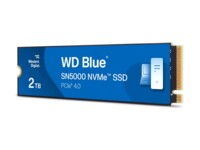
WD Blue SN5000 SSD WDS200T4B0E 2TB M.2 PCI Express 4.0 x4 (NVMe)

  • Product no 1003046790
  • Model WDS200T4B0E
  • Brand SanDisk
  • EAN 0718037893228

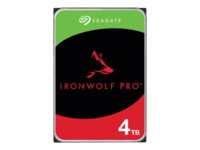
Seagate IronWolf Pro Harddisk ST4000NT001 4TB 3.5" SATA-600 7200rpm

  • Product no 1000752566
  • Model ST4000NT001
  • Brand Seagate
  • EAN 8719706432351

WD Red Harddisk WD60EFPX 6TB 3.5" SATA-600 5400rpm

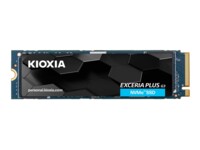
KIOXIA Exceria Plus G4 Series SSD LVD10Z002TG8 2TB M.2 PCI Express 5.0 x4 (NVMe)

  • Product no 1002949190
  • Model LVD10Z002TG8
  • Brand KIOXIA
  • EAN 4582563859982

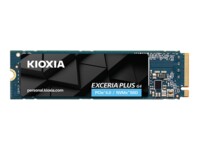
KIOXIA Exceria Plus G3 Series SSD LSD10Z002TG8 2TB M.2 PCI Express 4.0 x4 (NVMe)

  • Product no 1001685716
  • Model LSD10Z002TG8
  • Brand KIOXIA
  • EAN 4582563857889

Crucial SSD P3 1TB M.2 PCI Express 3.0 (NVMe)

  • Product no 1000677620
  • Model CT1000P3SSD8
  • Brand Crucial
  • EAN 0649528918796

XPG SSD GAMMIX S70 Blade 2TB M.2 PCI Express 4.0 x4 (NVMe)

Origin Storage Inception TLC830 Pro Series SSD 1TB M.2 PCI Express 4.0 (NVMe)

Transcend SSD 110Q 500GB M.2 PCI Express 3.0 x4 (NVMe)

Transcend SSD MTE400S 512GB M.2 PCI Express 3.0 x4 (NVMe)

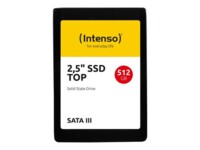
Intenso SSD TOP 2TB 2.5" Serial ATA-600

  • Product no 1000675759
  • Model 3812470
  • Brand Intenso
  • EAN 4034303032280

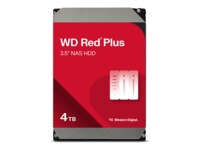
WD Red Harddisk WD40EFPX 4TB 3.5" SATA-600 5400rpm

Seagate Exos 7E10 Harddisk ST2000NM018B 2TB SAS 3 7200rpm

  • Product no 999387492
  • Model ST2000NM018B
  • Brand Seagate
  • EAN 8719706022064

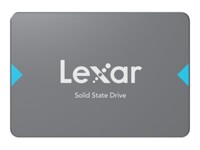
Lexar NQ100 SSD 2TB 2.5" Serial ATA-600

  • Product no 1003434774
  • Model LNQ100X002T-RNNNG
  • Brand Lexar
  • EAN 0843367140374

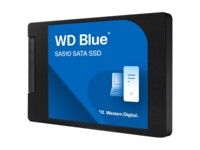
WD Blue SSD SA510 1TB 2.5" Serial ATA-600

  • Product no 1003960110
  • Model WDS100T5B0A-00LMP0
  • Brand Western Digital
  • EAN 0619659225445

Lexar Professional NM1090 Solid state-drev 2TB M.2 PCI Express 5.0 x4 (NVMe)

  • Product no 1002218248
  • Model LNM1090002T-RNANG
  • Brand Lexar
  • EAN 0843367134359

Patriot P410 Solid state-drev 2TB M.2 PCI Express 4.0 x4 (NVMe)

  • Product no 1003550044
  • Model P410P2TBM28H
  • Brand Patriot Memory
  • EAN 4711378431063

Crucial SSD P310 2TB M.2 PCI Express 4.0 x4 (NVMe)

  • Product no 1002514334
  • Model CT2000P310SSD8-T
  • Brand Crucial
  • EAN 0649528942609

Transcend SSD 110S 512GB M.2 PCI Express 3.0 x4 (NVMe)

Transcend Solid state-drev 370S 16GB mSATA SATA-600

Crucial SSD P3 Plus 2TB M.2 PCI Express 4.0 (NVMe)

  • Product no 1000677622
  • Model CT2000P3PSSD8
  • Brand Crucial
  • EAN 0649528918840

Internal hard drives

Internal hard drives are used for capacity-oriented storage in desktop PCs, workstations, servers, and storage systems where cost per GB and predictable operation are key parameters. The category covers internal HDDs, hard disk drives, and mechanical drives for both upgrades and new builds, as well as solutions where large data volumes need to be archived or handled locally.

Benefits for resellers

Internal hard drives make it possible to work with fixed capacity tiers and well-known form factors for standard configurations, service replacements, and project deliveries. The assortment can be composed to include models for general PC storage as well as drives targeted at scenarios requiring high uptime, sustained read/write workloads, or storage in NAS environments.

Key considerations in this category

  • Capacity and use case: Select capacity based on data volume, retention needs, and whether the drive is mainly for archive, backup, or active data workloads.
  • Form factor: 3.5" is typically used in desktops and storage systems, while 2.5" is often found in compact systems and certain enterprise setups.
  • Interface: SATA is common for standard platforms, while SAS can be relevant in server and storage environments with specific controller requirements.
  • Performance profile: RPM, cache, and workload ratings affect responsiveness and stability under sustained loads.
  • Compatibility: Check motherboard/controller support, chassis bay space, and cooling; mismatches can lead to noise, heat, or reduced lifespan.
  • Complementary storage: For faster system storage, an SSD can be combined with HDDs for data, archive, and backup.

Related subcategories

Internal HDD
Mechanical hard drives for capacity-focused storage in PCs, workstations, and storage tasks.

Internal SSD
Storage with a focus on higher speed and lower latency, often used as system and application drives.

Components
Related parts for complete builds and replacements where storage must match the rest of the hardware.

Computer cases
Case selection affects drive mounting, airflow, and space for 2.5"/3.5" drives.

Fans and coolers
Proper cooling can improve stability and lifespan, especially in systems with multiple drives or high duty cycles.

Brands in this category

Frequently asked questions

When do internal hard drives make more sense than SSDs?

When capacity and cost per GB matter more than maximum speed, such as for archives, backups, and large data sets.

Which form factor should be chosen: 2.5" or 3.5"?

3.5" is typically standard for desktops and storage systems, while 2.5" is often used in compact systems and some enterprise platforms.

What should be considered regarding the interface?

SATA fits most standard platforms, while SAS requires a compatible controller and is more common in server and storage environments.

Can HDDs and SSDs be combined in the same system?

Yes, an SSD can be used for OS and applications while HDDs handle data, archives, and backups.

How does cooling affect operation and lifespan?

Stable temperatures reduce the risk of failures under long-term load, especially in multi-drive systems.